
Jefferson County Criminal Court Records
A criminal court record is the court-maintained case file, not the arrest report. In Jefferson County, felony prosecutions are handled in District Court, while misdemeanors and many traffic crimes are handled in County Court unless transferred or appealed. The file can show the complaint or information, charges, advisement, bond events, motions, plea documents, protection orders, minute orders, disposition, sentence, and register of actions.
Once a case opens, the Clerk of Court maintains the court record. The First Judicial District Attorney prosecutes criminal cases for Jefferson and Gilpin counties, and the Colorado State Public Defender Golden office represents eligible people accused of crimes who cannot afford counsel. A person looking for current custody should use inmate records, while a person reading the prosecution history should use criminal court records.
The District Attorney biography page identifies Alexis King as the First Judicial District Attorney serving Jefferson and Gilpin counties.
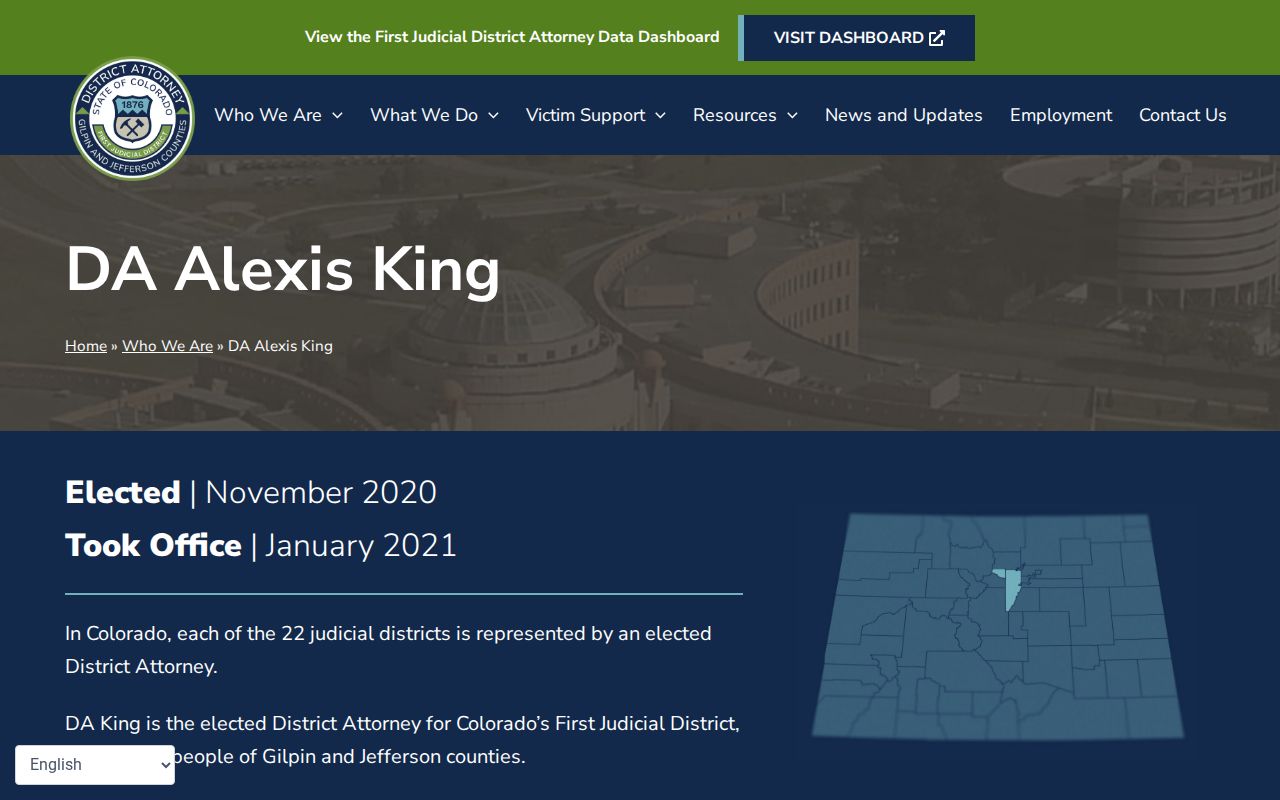
The DA office context matters because formal criminal charges in Jefferson County are prosecuted through the First Judicial District.
Search Jefferson County Criminal Court Records
Begin with the Colorado Judicial Branch docket search for hearing and event data. Choose 1st Judicial District, Jefferson Combined Court, and District or County Court. Use CR for felony criminal cases when known, M for misdemeanor cases, and T for traffic matters. The docket can help locate the case number needed for a formal record request.
If the defendant name is common, combine the name with a narrower date range, court type, attorney information, or the case-number pieces from another notice. The court request form also allows date of birth and other identifying details when asking for documents.
- Search the docket by case number, defendant name, business name, or attorney information.
- Confirm whether the criminal case is in District Court, County Court, or a municipal court.
- Review the docket events for arraignment, motions, plea, trial, disposition, or sentence entries.
- Use the record/document request form for complaint/information, disposition/sentence order, protection order, ticket, or register of actions.
- Request certified copies through the Clerk of Court when an official record is required.
The Colorado State Courts Data Access portal may show public court data, but the portal states that it does not contain case documents. Statewide criminal history checks are separate and use CBI channels rather than the court docket.
Jefferson County Criminal Case Flow
A criminal case record grows as the case moves through court. Early entries may show charges filed and advisement. Later entries may show arraignment, pretrial conferences, motions, continuances, plea settings, trial settings, verdicts, disposition, and sentencing. The docket gives the event trail, while the case file holds requestable documents.
Case flow: Charges Filed › Arraignment › Pretrial and Motions › Plea or Trial › Disposition › Sentencing
| Stage | What Happens |
|---|---|
| Charges Filed | The complaint or information starts the court charge record after prosecutor review. |
| Arraignment | The defendant is advised of charges and may enter or set a plea. |
| Pretrial and Motions | The court records hearings, motions, continuances, bond issues, and orders. |
| Plea or Trial | The case resolves by plea, verdict, dismissal, acquittal, or other court action. |
| Disposition and Sentencing | The final charge outcome and sentence terms are entered if there is a conviction or plea. |
What Jefferson County Criminal Records Show
Criminal court records may show both accusations and outcomes. That makes close reading important. One arrest can produce several counts. Some counts can be amended, reduced, dismissed, or resolved differently from others. The disposition and sentence should be read charge by charge, not assumed from the first count listed.
| Field | What It Shows |
|---|---|
| Case Number | Filing year, case class, and sequence, with CR, M, or T often relevant to criminal matters. |
| Defendant | The person charged, with protected identifiers redacted from public display. |
| Charges | Offenses alleged in the complaint or information, including amended or dismissed counts where public. |
| Plea | How the defendant responded to the charge or resolved the count. |
| Disposition | The final outcome, such as guilty, dismissed, acquitted, deferred, or other court action. |
| Sentence | Jail, probation, fines, costs, restitution, treatment, protection order, or other terms if imposed. |
Problem-solving court entries can also appear in criminal case histories. The First Judicial District Attorney describes alternative solutions, including problem-solving courts and Fresh Start warrant clearing.
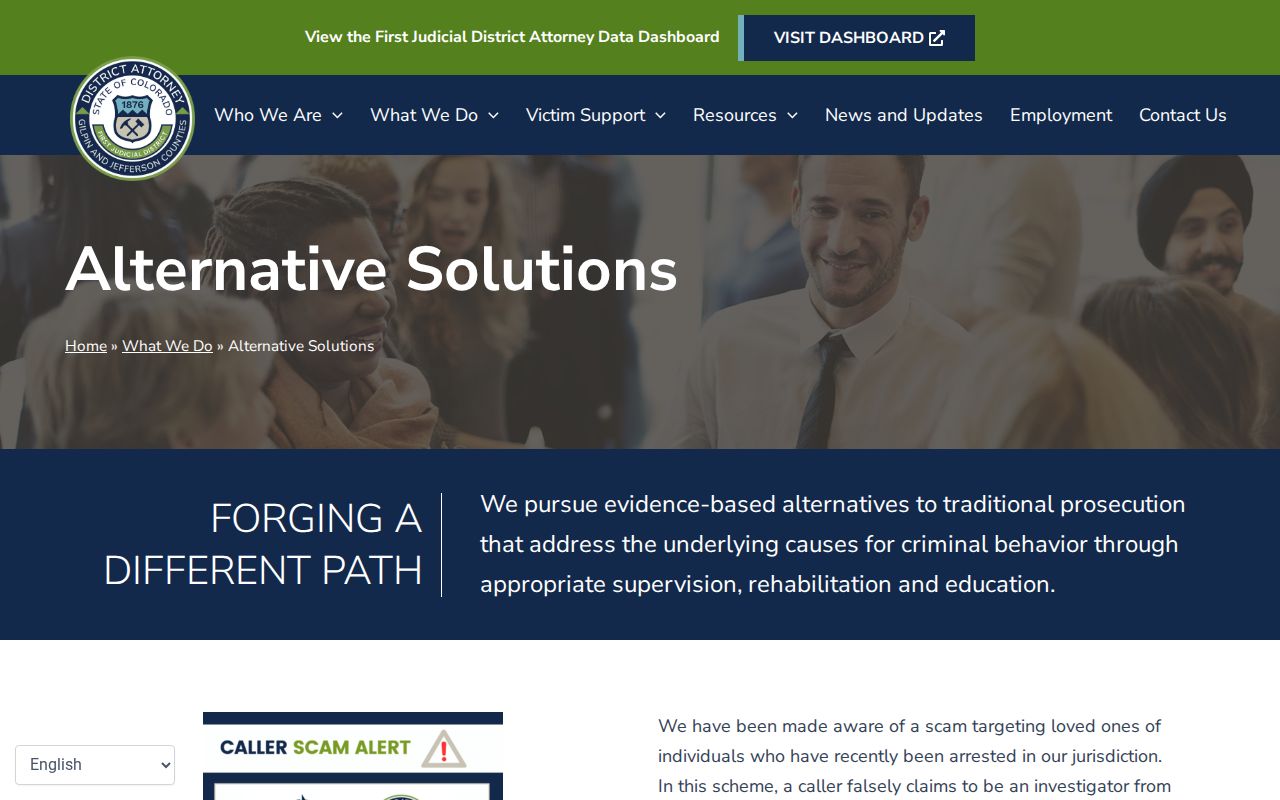
Alternative-solution programs can affect docket events, probation terms, review hearings, and final dispositions in eligible criminal cases.
Charges vs Convictions
A charge is an accusation filed in court. A conviction is an outcome after a guilty plea, guilty verdict, or other qualifying finding. Jefferson County criminal court records may show both, so a charge list should not be read as a conviction list. For the charge-by-charge pathway after arrest, see the Jefferson County arrest records and court charges page.
| Point | Charge | Conviction |
|---|---|---|
| Meaning | Offense alleged by prosecution. | Finding or plea of guilt. |
| Timing | Early or amended during the case. | After plea, trial, or qualifying disposition. |
| Record reading | May be pending, reduced, or dismissed. | Read with sentence and final disposition. |
Sealed and Expunged Criminal Records
Colorado sealing law can restrict criminal court records from ordinary public access. The CBI court-order sealing page cites CRS 24-72-704 and CRS 24-72-705 for no-charge, nonconviction, and other qualifying criminal-justice records. Sealed records are not released through ordinary public court, sheriff, or CBI channels.
| Point | Sealed | Expunged |
|---|---|---|
| Public visibility | Hidden from ordinary public access by law or court order. | Destroyed or removed in limited categories, often tied to juvenile or specific statutory relief. |
| Custodian effect | Court, CBI, sheriff, police, or DA may receive sealing orders. | Access is more limited, depending on the statute and record type. |
| Colorado note | Some nonconviction petitions show a $0 fee; other listed sealing petitions show $224. | Do not assume all adult criminal records are eligible for expungement. |
The CBI page is the correct state-level source for how court-ordered sealing affects criminal-history repositories.
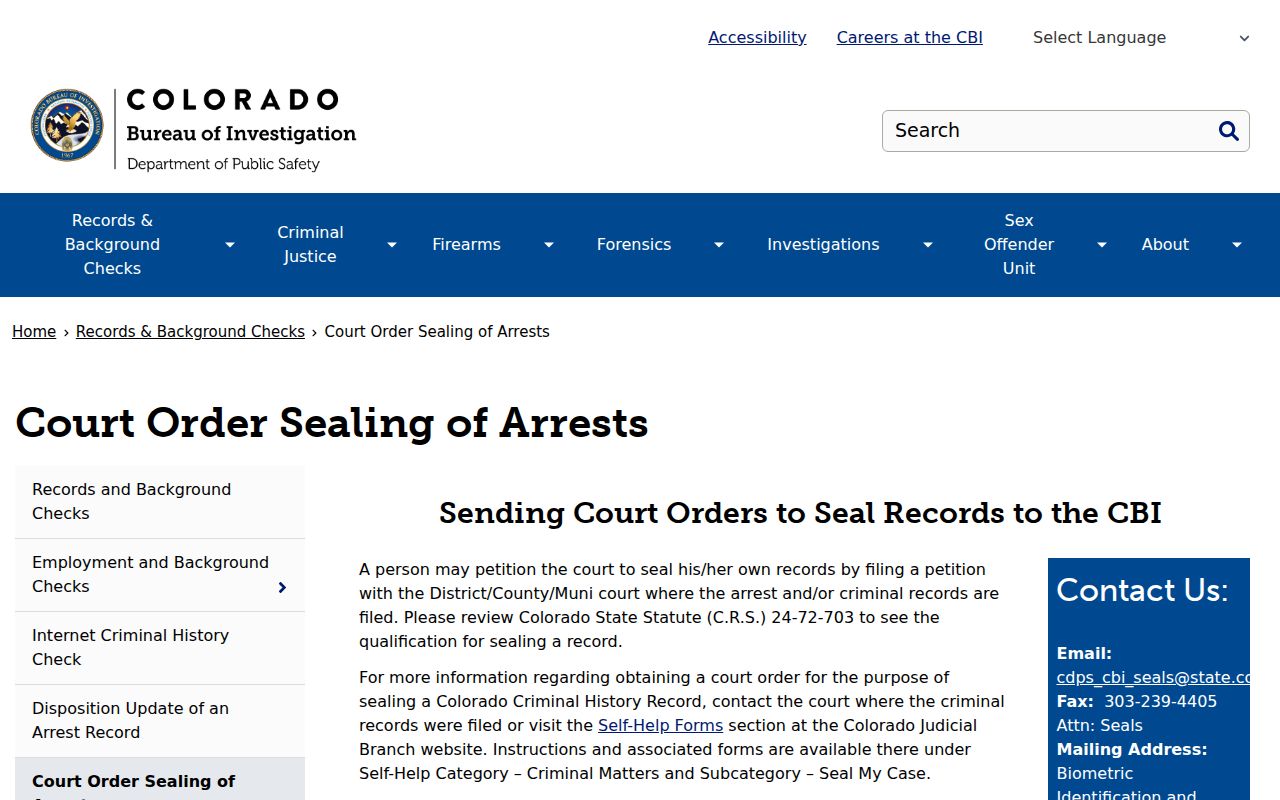
Sealing can block public access, but the court order must reach the relevant custodians before all public-facing systems reflect the change.
Public Access to Criminal Records
Criminal court case access is governed by Colorado court record rules, including Chief Justice Directive 05-01, while sheriff, police, DA, CBI, and DOC records follow the Colorado Criminal Justice Records Act. The Colorado Attorney General explains the distinction between CORA and criminal-justice records. For court case files, the practical route is the Judicial Branch docket, Data Access where available, and the record/document request form.
Copies may carry plain-copy, certified-copy, name-search, retrieval, or redaction fees. The court may also require identification when a requested criminal case includes suppressed information, protected parties, juvenile material, or documents restricted by order.
Key access rules:
Judicial Branch access guide - court-system public records are generally open at reasonable times unless restricted.
Colorado Attorney General CORA and CCJRA overview - criminal-justice records use a distinct access framework.
Defense and Federal Case Channels
The Colorado State Public Defender Golden Regional Trial Office represents eligible defendants in Jefferson and Gilpin county criminal cases. The office does not represent people accused in municipal or federal courts. People in jail automatically qualify for public defender services under the researched state public-defender application facts, but court records still remain with the court clerk.
Federal criminal records do not route through Jefferson Combined Court. District of Colorado federal cases use federal CM/ECF and PACER channels.
Use federal access tools only when the charging court is the U.S. District Court for the District of Colorado, not Jefferson County District or County Court.
Note: Juvenile, sealed, protected, and suppressed criminal court records may require ID, party status, attorney status, or a court order.